Companion guide · Checked 28 October 2026
Companion guide · Checked 28 October 2026
At a glance
Kazakhstan is the world's ninth-largest country, and it travels that way: huge distances, huge skies, and scenery that changes completely between the southern mountains and the northern steppe. This guide is written for a first trip — and for travellers already in Uzbekistan, since the two countries pair into one of Central Asia's best two-week journeys.
Capital: Astana (the purpose-built capital on the northern steppe). Largest city: Almaty, the former capital, at the foot of the Tian Shan mountains in the south-east. Currency: the tenge (KZT) — about 448 tenge per US dollar in October 2026 (TravelerCenter, October 2026). Languages: Kazakh and Russian; Russian is the practical language for visitors, and English is limited outside Almaty's main tourist spots. Best first-trip season: late May–June and September–early October. Visa: visa-free for 30 days per entry for citizens of around 85 countries, including the US, UK, EU states, Canada, Australia, New Zealand, Japan and South Korea (see the visa section below — and the new QazETA authorisation, which becomes mandatory in July 2027).
If you only have a week and want old towns and monuments, start with Uzbekistan's 7-day itinerary instead. If you have two weeks, do both — see the Uzbekistan vs Kazakhstan comparison for the honest trade-offs.
The cities
Most first trips base in Almaty and add Astana by flight. Turkistan is a detour south for one specific, magnificent reason.
Almaty was the capital until 1997 and still feels like the country's real centre: tree-lined streets, cafés, markets and mountains on the horizon. The Green Bazaar is the place for dried fruit, nuts and people-watching; Panfilov Park and the Zenkov Cathedral (Ascension Cathedral) are the classic central sights; Kok-Tobe hill gives the city panorama. The metro is small and cheap, taxis are inexpensive, and the mountains start where the city ends.
Astana is a planned capital on the steppe: wide boulevards, the Bayterek Tower, the Khan Shatyr entertainment centre, and a skyline that looks drawn rather than grown. It is worth a day or two, best combined with a flight from Almaty rather than the 12–13-hour overnight train — unless you enjoy sleeper trains, in which case the train is comfortable and part of the experience. Winter here is the catch: January averages around −15 °C, with cold snaps far lower and a brutal wind, so a winter trip should stay south unless you are skiing.
Turkistan, in the south, holds the Mausoleum of Khoja Ahmed Yasawi — a vast Timurid shrine, unfinished since the 14th century and a UNESCO World Heritage site since 2003. It is a long way from Almaty, so most visitors reach it from Shymkent or as part of a southern loop; do not try to squeeze it into an Almaty-only week.
Day trips from Almaty
Almaty earns its base-camp reputation: the best of Kazakhstan's nature sits a few hours out, and group tours cover the routes most visitors want.
Distances above are planning figures from October 2026 guides; driving times vary with road and weather, and high mountain passes close in winter. Check conditions before setting out.
Visa and entry
Kazakhstan is easy to enter for most nationalities, but two rules need attention: the rolling 90-day cap, and the QazETA electronic authorisation that phases in from November 2026.
Citizens of around 85 countries — including the United States, the United Kingdom, EU member states, Canada, Australia, New Zealand, Japan and South Korea — enter visa-free for 30 days per entry. The standard stay is 30 days for most of those countries; a few (EAEU citizens among them) get 90 days, and a handful get 14 or 60 days, so check your own passport's row in the Foreign Ministry table before booking. The headline limit is cumulative: no more than 90 days in any 180-day period for visa-free visitors, and leaving and re-entering does not reset it — Kazakhstan has abolished the old "visa run" practice. If your trip is longer, apply for a visa or an extension through the migration authorities before your permitted stay expires.
After entering, your arrival must be notified to the migration authorities within 3 working days — by your receiving party: your hotel or host files it, so ask for confirmation at check-in. A short stay does not exempt you, and the notification does not extend your permitted stay.
Kazakhstan is introducing an electronic travel authorisation, QazETA, for visa-free visitors, in phases (announced October 2026):
Travellers are advised to allow at least three days before travel to obtain it, and to apply with the exact passport they will present at the border. Exemptions include children under 16, travellers over 65, holders of valid Kazakh visas and residence permit holders. For a trip in late 2026, QazETA is worth checking but not yet a barrier; for 2027 travel, treat it as part of booking. Rules change — re-check the government platform before you travel.
Sources, checked 28 October 2026: Kazakhstan Foreign Ministry visa table (April 2026) via the MFA and eGov guidance summaries; Serbian Foreign Ministry Kazakhstan entry page (30 days per entry, 90 in 180, QazETA phases, October 2026 amendments); QazETA rollout reporting (17 October 2026); UK guidance via Caravanistan and TravelerCenter. Passport validity of six months beyond departure is the usual requirement — confirm for your passport.
What it costs
Kazakhstan is not expensive by European standards, but it costs more than Uzbekistan, day to day. All figures below are planning estimates, not quotes.
| Typical cost (October 2026 guides) | |
|---|---|
| Café meal | About $5.60–10 (beshbarmak or plov, 2,500–4,500 tenge) |
| Mid-range dinner, per person | About $16–33 (7,000–15,000 tenge) |
| Mid-range hotel, double, per night | About $67–134 (30,000–60,000 tenge) |
| Mid-range day, all in | About $100–167 per person sharing a double room (45,000–75,000 tenge); backpackers using hostels and public transport can manage on about $40–63 |
| Group day tour, Charyn / Kolsai | About $120–200 for fuller group tours (August 2026 guide figure); basic day-trip listings start lower and private tours cost several times more — check what is included |
| Taxi across Almaty | About $3.30–7.80 by ride-hailing (1,500–3,500 tenge) |
| Overnight train, Almaty–Astana sleeper | About $33–90 (15,000–40,000 tenge) |
Sources: TravelerCenter Kazakhstan guide, October 2026 (meals, hotel, daily totals, taxi, train, converted at about 448 tenge per US dollar); Atlas Guide, August 2026 (group tour range). Exchange rates move — re-check the tenge rate for your dates, and confirm tour prices for what they include (transport, guide, meals, entry fees) before booking. For the Uzbekistan side of a combined trip, see this site's trip cost calculator and the comparison page.
Getting there from Uzbekistan
This is the practical reason the two countries pair so well: the connection is a short hop, not a journey in itself.
A combined 14-day plan — one week in Uzbekistan's Silk Road cities, one week in Almaty and its mountains — is set out on the comparison page.
Practical tips
The details that save a first-timer a day of confusion.
The tenge (KZT) is the only currency. Cards work in Almaty's hotels, restaurants and malls, and Kaspi Pay QR payments are common in the city; carry cash for bazaars, small cafés, mountain guesthouses and rural transport. ATMs are easy in both big cities. About 448 tenge per US dollar in October 2026 (TravelerCenter) — check the current rate before you change money.
Kazakh is the state language and Russian the practical lingua franca: signs, menus and tour information in Russian will carry you further than English outside Almaty's main tourist spots. A few Russian phrases — and the Cyrillic alphabet — go a long way. Young city Kazakhs increasingly speak English, but do not count on it in markets or on buses.
The US State Department rates Kazakhstan Level 1 — Exercise Normal Precautions (advisory issued 18 August 2026, describing the country as "generally a safe destination for travelers"). Normal city precautions apply: pickpocketing in markets, on buses and around transport hubs, unlicensed taxi overcharging at airports (use ride-hailing or official taxis), and care on winter roads. Mountain weather changes fast — check conditions and carry layers before heading above the city.
Within Almaty, the metro and ride-hailing taxis are cheap and easy. Between cities, domestic flights save days: Almaty–Astana is about 12–13 hours by the fastest overnight train, so fly unless you want the sleeper experience. Buy train tickets on the railway's official site or app, or at stations, with your passport. For Charyn, Kolsai and the mountains, group tours are the simplest option for a first trip; independent travel needs a hired car and some Russian.
| Day | Where | What to do |
|---|---|---|
| Days 1–2 | Almaty | Green Bazaar, Panfilov Park and Zenkov Cathedral, Kok-Tobe for the panorama, and the city's café streets. Sleep in the centre. |
| Day 3 | Almaty mountains | Medeu and Shymbulak by cable car — skiing in season, hiking and views in summer. Evening back in the city. |
| Day 4 | Charyn Canyon | Full-day group tour: the canyon floor walk, then back to Almaty for the night. |
| Days 5–6 | Kolsai & Kaindy | Overnight tour: Kolsai's first lake, Saty village guesthouse, then Kaindy's sunken forest in the morning before returning to Almaty. |
| Day 7 | Astana (or a second Almaty day) | Fly to Astana for Bayterek Tower and Khan Shatyr, then fly home — or, if the north does not tempt you, spend the day at Big Almaty Lake instead and leave Astana for a longer trip. |
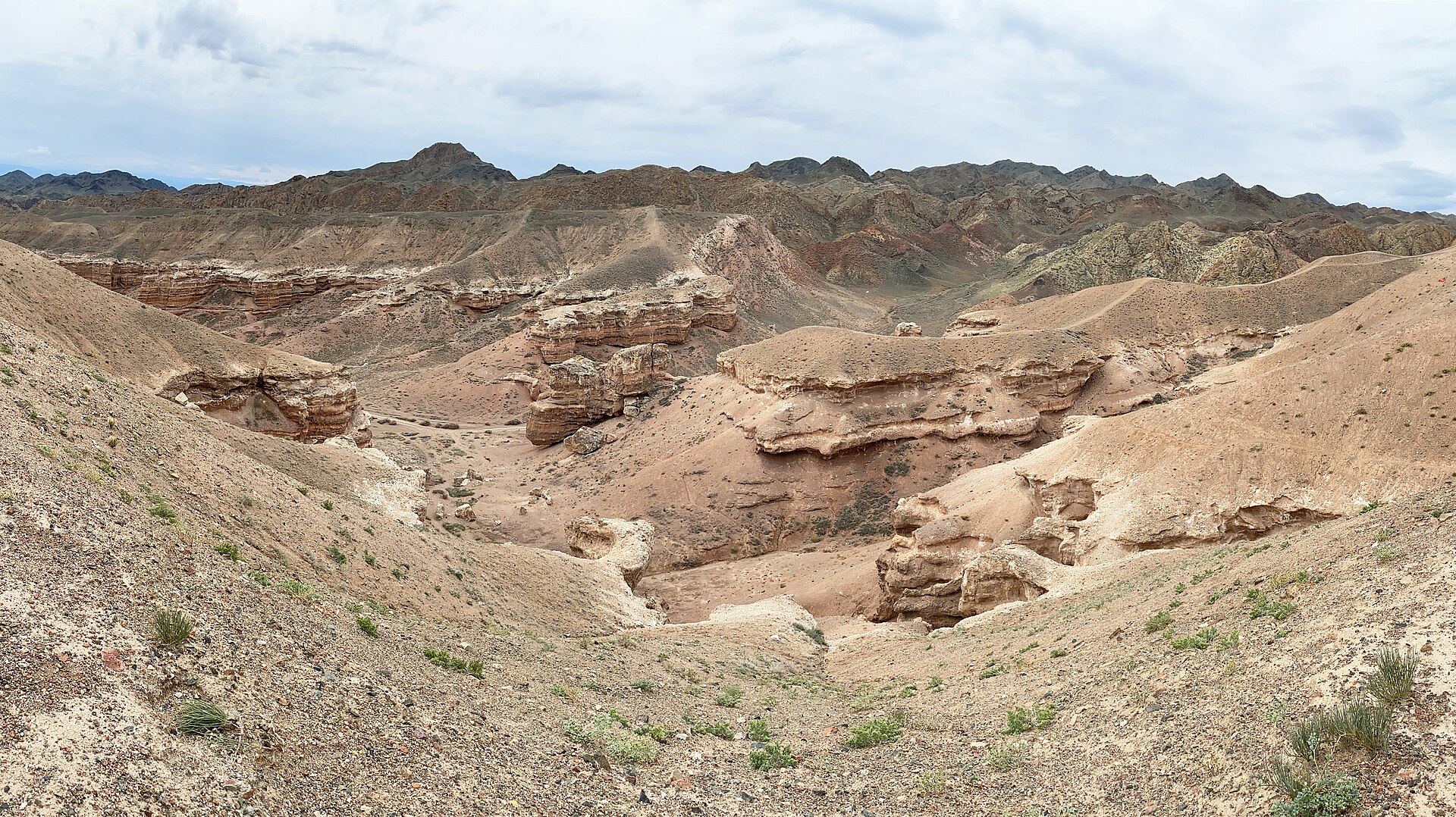
All facts on this page were checked on 28 October 2026. Prices, visa rules (including QazETA), timetables and safety advice change — re-check the Kazakh government platforms, your government's travel advisory, and current hotel and tour prices before booking. Banner photo: Charyn Canyon, Kazakhstan — Wikimedia Commons, CC0, photo by Bgag. Uzbekistan guides: Tashkent · Samarkand · Bukhara · Khiva · Visa guide · 7-day itinerary · Uzbekistan vs Kazakhstan · Hotels · Cost calculator.